
Geometry and Light —
Architecture & Interior Photography
Lines, planes, and the flow of light — the same building looks entirely different depending on time and angle.
Have you wondered?
"Why do buildings always look like they're falling backwards in my photos?"
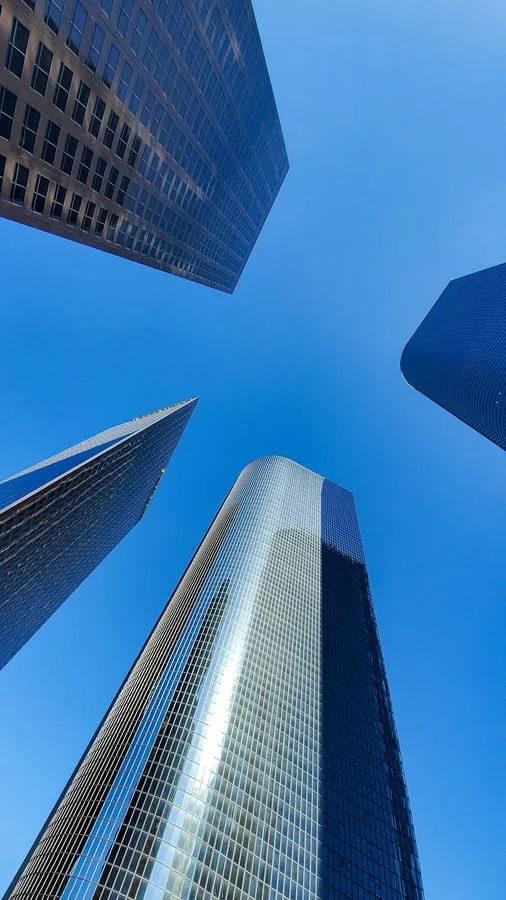
Tilting the camera upward creates keystone distortion — vertical lines converge inward. Two fixes: ①keep the camera level and shoot from the building's mid-height, ②correct in Lightroom via Geometry → Vertical. A tilt-shift lens resolves it optically at the time of shooting, but it's an expensive specialty lens.
"Isn't it misleading that interior photos look wider than the actual space?"
Wide-angle lenses physically make spaces appear larger — it's a property of optics, not manipulation. Real-estate photography uses wide angles for exactly this reason. However, using extreme angles or heavy HDR compositing to misrepresent the actual space can be problematic. Interior photos taken with 16–24mm lenses are industry standard.
What Makes Architecture Photography Compelling
This genre captures how natural light flows through human-built spaces.
The Aesthetics of Lines
Vertical, horizontal, diagonal, curved — architecture is a subject built from lines. Capturing them precisely is the core skill.
Light Transforms Space
The same building looks completely different in morning light, evening light, or on an overcast day. Calculate the light direction before visiting.
Strong Commercial Demand
Real estate, hotels, cafés, commercial venues — architectural and interior photographers have steady commercial work.
Is This the Right Genre for You?
If 3 or more apply, architecture photography is a great fit.
You find the lines and forms of structures like buildings, bridges, and staircases beautiful
When entering a space, you naturally think about the best angle to shoot
You're precise and detail-oriented — you enjoy aligning horizontals and verticals
In a new space, you tend to notice the interior design and lighting
You enjoy photographing landmark buildings when traveling
Core Techniques in Architecture Photography
Architecture photography requires unique skills not found in other genres.
Align Horizontals and Verticals
Enable the camera's electronic level and align the horizon precisely. Also activate the viewfinder grid. Even a 1–2 degree tilt makes a photo look unstable. Post-processing with the crop tool can correct it, but you lose part of the frame.
Calculate the Right Time of Day
Optimal shooting time depends on the building's orientation (east/west/north/south). East-facing facades get direct front light in the morning; west-facing in the afternoon. Use PhotoPills or Sun Surveyor to pre-calculate light direction and timing.
Use Symmetrical Composition
Symmetry is the most stable and powerful approach for architectural subjects. Stand at the building's center and level the camera perfectly — the symmetrical composition takes care of itself. Reflections in water or glass also create great symmetry.
Find Leading Lines
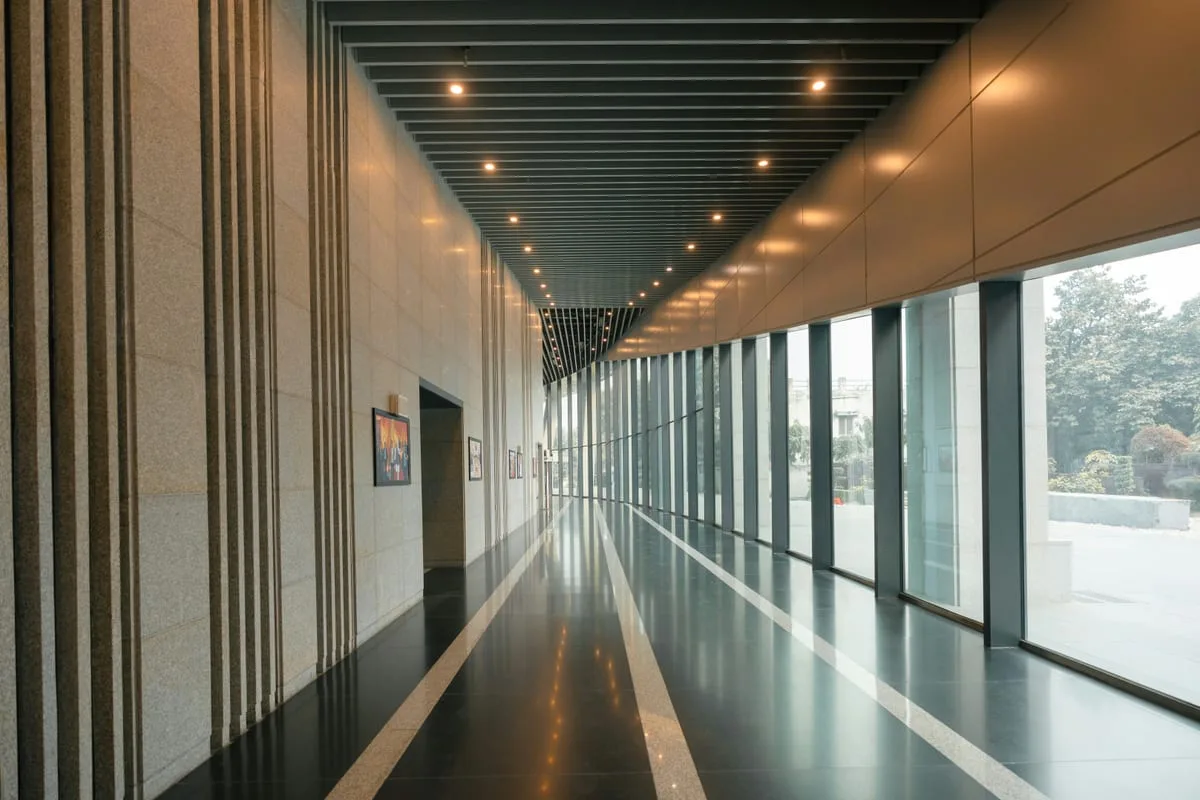
Look for corridors, staircases, and roads that lead the eye into the frame. The viewer's gaze is naturally guided into the depth of the photo, creating a strong sense of three-dimensionality.
expand_moreLearn more — HDR Blending & the Indoor/Window Exposure Problem
The biggest challenge in interior photography is the exposure gap between windows and the room. Expose for the interior and windows blow out; expose for the windows and the room goes dark.
- HDR Blending: Shoot the same composition at multiple exposures, then merge in Lightroom's HDR Merge or Photoshop. Tripod required.
- Window Masking: Use Lightroom's Sky/Window masking to adjust window brightness independently. Latest Lightroom AI masking auto-selects windows.
- Flash Balancing: Use a strobe or LED panel to bring room brightness closer to window brightness. The most commonly used technique among professional interior photographers.
Recommended Gear for Architecture Photography
Wide-angle lenses and tripods are the essential tools of this genre.
16–35mm Wide-Angle Zoom
Capture full buildings even in tight spaces. The zoom gives flexible framing and is ideal for getting comfortable with wide angles.
Tripod + Remote Shutter
Night architecture, HDR compositing, and long exposures all require a tripod. A remote shutter (or self-timer) eliminates camera shake for maximum sharpness.
24mm Tilt-Shift Lens (PC-E)
Optically corrects vertical distortion without post-processing. The industry standard for commercial architectural photography. Consider after landing real-estate or hotel commissions.
Find a Nearby Building — Shoot 5 Frames with Perfect Horizontals
- →Enable grid lines and align the horizontal to a horizontal element on the building
- →Stand at the building's center front and shoot one symmetrical frame
- →Shoot one frame from the corner including a leading line (corridor or staircase)
- →Time the shot when morning or afternoon light hits the facade directly
- →Try correcting vertical lines in Lightroom after shooting
More Content to Explore
Last updated: April 2026