
Capture Landscapes & Night Scenes
Dramatically
Know the timing of light, nail the composition, and understand long exposure — and the same location tells a completely different story.
Questions you might have
Q. Smartphone night shot vs. camera night shot — what's the real difference?
→ Smartphones use AI multi-exposure compositing (computational photography) for night shots. It's fast and convenient, but light trails and long-exposure effects are impossible. A camera gives you direct shutter control — capturing 'time itself' in a photo. Silky water, light streaks — those are camera-only expressions.
Q. Does shooting at golden hour actually make photos better, or is it just marketing?
→ Scientifically, it's real. The lower the sun, the longer the path through the atmosphere — blue light scatters while only red and orange wavelengths remain. Color temperature drops to 2000–3500K, creating warm, soft light. A shot from the same location at 2pm and at golden hour are completely different results.
Timing the Light
90% of a landscape photo is determined by when you shoot. Aim for golden hour and blue hour.
Composition & Foreground
Including a foreground element gives the photo depth. Empty sky or empty ground is wasted space.
Long Exposure & Tripod
A long shutter makes water look like silk and lights become streaks. A tripod is essential.
The Golden Window — Golden Hour & Blue Hour
The same location produces completely different photos at different times of day. This is why landscape photographers set their alarms for 4am.
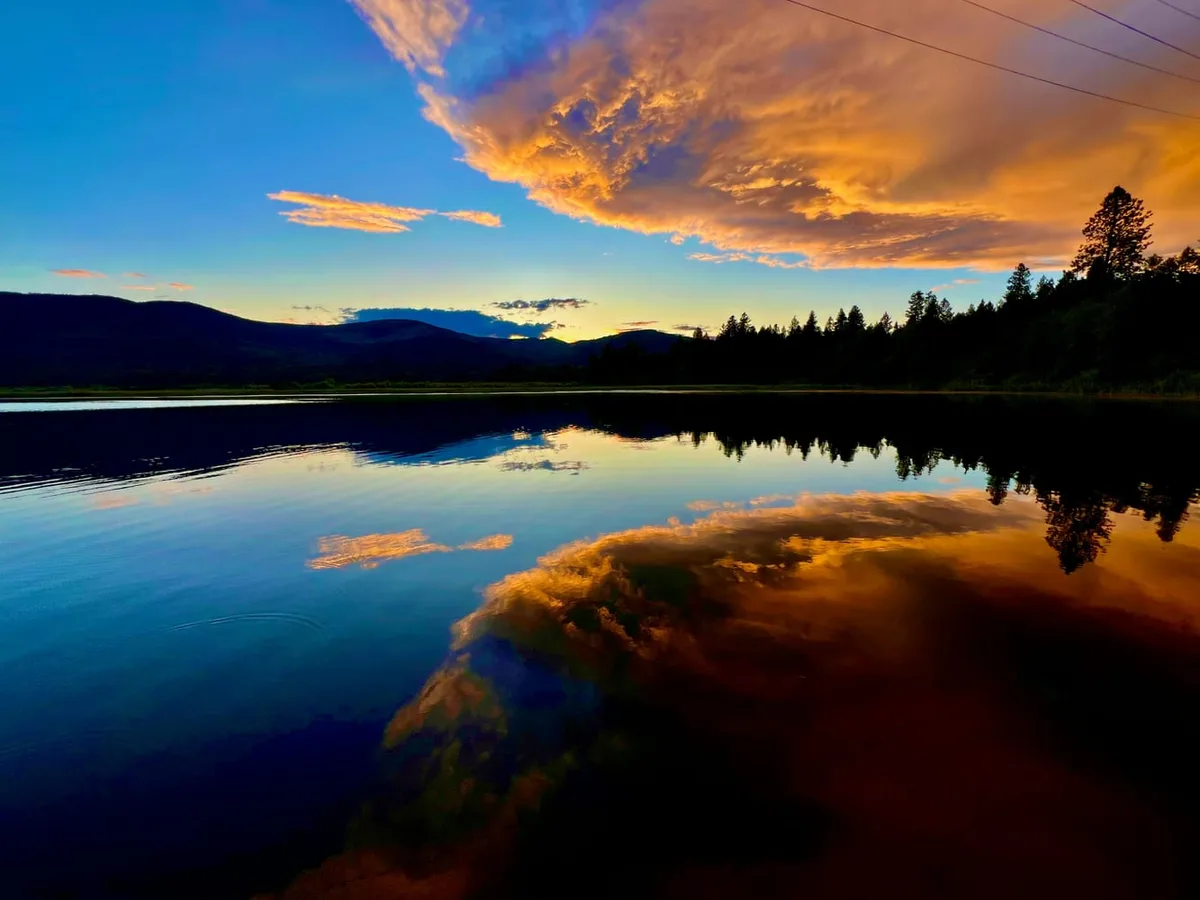
The softest, freshest light of the day. Often fewer people, with mist for a mysterious atmosphere.
💡 Scout the location the evening before → depart at 4–5am
Warm orange, pink, and purple sky. Even more dramatic with clouds.
💡 Check cloud cover with a weather app → 30–60% cloud cover explodes with color
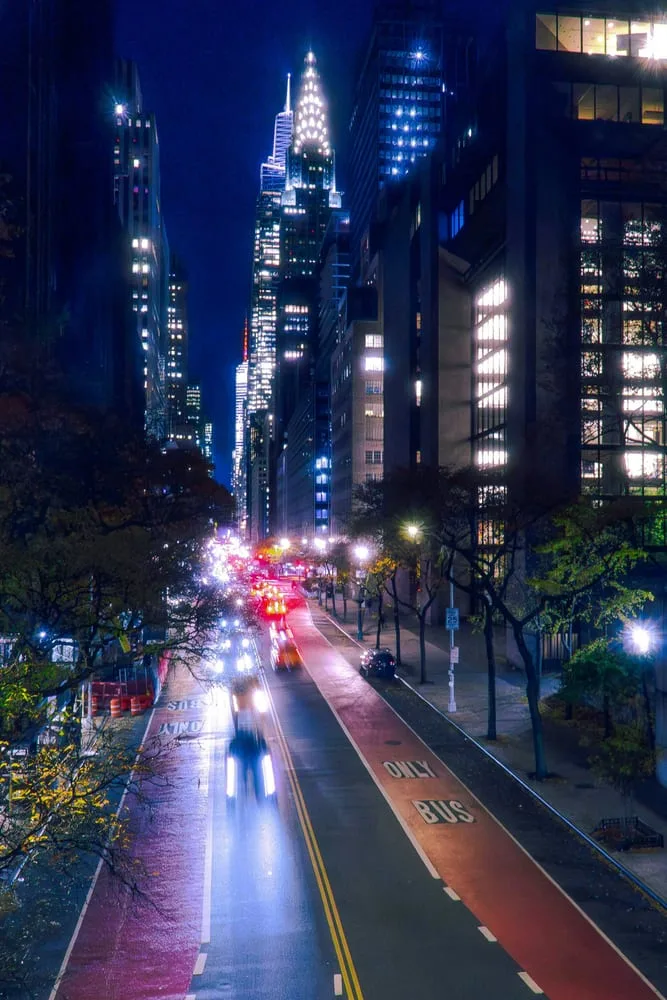
A brief window where the sky turns deep blue. Combined with city lights, it perfectly balances building lights.
💡 ISO 400–1600, f/8, shutter 3–15s. Tripod required.
High sun creates harsh, hard light. Shadows are short and colors are flat. The worst time for landscape photography.
💡 If you must shoot midday, use a CPL filter to boost sky contrast.
Long Exposure — Capturing Time Itself
When you leave the shutter open, moving things leave traces. Flowing water, clouds, car light trails — all are products of long exposure.
Step-by-Step Guide to Long Exposure Settings
Set Up & Lock Down the Tripod
The most critical condition for long exposure. On windy days, hang a bag from the center column as a counterweight.
Set M Mode, ISO 100, f/8–f/11
Lower ISO to minimum to minimize noise. Around f/8 is the sharpest aperture for most lenses.
Use Shutter Speed to Dial In Exposure
Watch the histogram — find the shutter speed just before the right edge clips. Water blur: 1–10s / Light trails: 20–60s.
Fire with Timer or Remote
Pressing the shutter by hand causes vibration. Use the 2-second timer or a remote release.
expand_moreAdvanced — Long Exposures Over Several Minutes with Bulb Mode
When you need exposures beyond 30 seconds, set the shutter to 'Bulb' in M mode. The shutter stays open as long as the button is held, then closes when released.
Using an intervalometer (remote timer) lets you set precise durations and shoot without camera shake. Essential for star trails and cloud movement.
Water Rendering by Shutter Speed
Landscape Composition Essentials
The subject doesn't move, so there are no variables except composition. Composition is everything.
Include Foreground
Adding rocks, flowers, puddle reflections, or sand as foreground gives the photo depth and scale.
Horizon on the Third
If the sky is dramatic, give it 2/3 of the frame. If the ground is interesting, give it 2/3.
Always Level the Horizon
A tilted horizon is fatal in landscape photography. Use your camera's built-in level.
Use Leading Lines
Roads, rivers, fences — linear elements leading to a vanishing point naturally draw the eye.
Without a tripod, place your camera on a railing, wall, or ground and use a 2-second timer. Raise ISO to 1600–6400 to secure a shutter speed of at least 1/30s for handheld shooting.
Recommended Gear for Landscape Photography
In landscape photography, image quality is determined more by the lens and tripod than the camera body.
※ Prices are based on 2025 and may vary with exchange rates and discounts.
Wide-Angle Lens (14–35mm)
Captures the wide field of view of a landscape. Equivalent to 10–22mm on APS-C.
Why: Fits foreground, midground, and background in one frame to maximize spatial depth.
Tripod
Essential for long exposure, night, and dawn shooting. A lightweight carbon tripod is recommended.
Why: Any shutter speed over 1 second produces hand-shake blur. Long exposure is impossible without a tripod.
CPL Filter (Circular Polarizer)
Enhances sky color, removes water reflections. Dramatic effect for daytime landscape.
Why: Creates a physical light-blocking effect that can't be replicated in post-processing.
ND Filter
Enables long exposure even in daylight. ND64–ND1000 recommended.
Why: To render waterfalls and the sea like silk in bright daylight, you need to physically reduce the light.
Outdoor Landscape Challenge — 30 Minutes Before Sunset
- →Check today's sunset time with a weather app → arrive on location 30 min early
- →With a wide angle, find a foreground element and frame the composition (puddle, flower, rock, etc.)
- →Place the horizon at a third (sky 2/3 or ground 2/3)
- →Keep shooting through the blue hour, 15 minutes after sunset
- →If you shot RAW, try adjusting white balance in Lightroom
More Content to Explore
마지막 업데이트: 2026년 4월